

Research Chemicals
Research Chemicals in Pharmaceutical Development
Feb
A brand new way
Auscare Store – Educational Resource for Australian Researchers
Introduction: The Critical Role of Research Chemicals
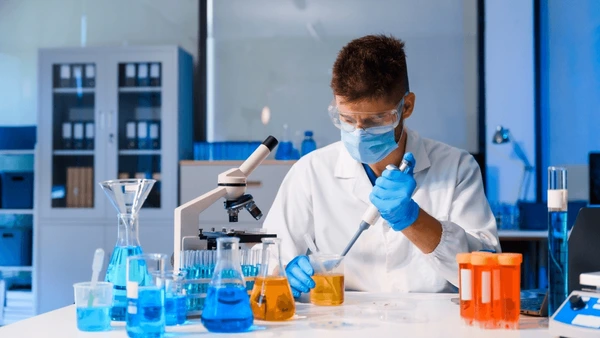
Research chemicals are high-purity compounds designed exclusively for laboratory, academic, and scientific research. In pharmaceutical development, these compounds serve as the essential building blocks for discovering and optimizing new therapeutic agents .
From fragment-based drug discovery to sustainable synthesis methods, research chemicals enable scientists to:
-
Identify novel drug candidates
-
Optimize lead compounds for efficacy and safety
-
Study structure-activity relationships
-
Validate biological targets
-
Develop analytical methods for quality control
As we move through 2026, the pharmaceutical industry is witnessing transformative changes in how research chemicals are developed, screened, and applied .
Emerging Trends in Pharmaceutical Research Chemicals
1. Fragment-Based Drug Discovery (FBDD) and 3D Chemical Space
Fragment-based drug discovery has become a well-established approach in pharmaceutical development, with eight FDA-approved drugs reaching the market as of November 2025 . This methodology relies on screening low-molecular-weight compounds (typically ≤300 Da) to identify efficient starting points for drug development.
Recent advances are expanding beyond traditional “flat” 2D fragments into three-dimensional (3D) chemical space. Researchers are now developing novel synthetic methodologies for constructing 3D scaffolds including cyclobutane, cyclopropane, and azabicyclic rings—and integrating them into FBDD workflows .
Why 3D fragments matter:
-
Increased molecular diversity and broader chemical space exploration
-
Improved solubility and reduced promiscuity of drug candidates
-
Higher clinical success rates associated with greater 3D character
-
Novel intellectual property opportunities
A recent breakthrough demonstrated the successful screening of a focused 3D fragment library against the histamine H₁ receptor, identifying a cyclobutane-containing hit that was optimized into a high-affinity antagonist (VUF26691, pKi = 8.8) .
2. Sustainable Electrochemical Synthesis
The development of new therapeutic molecules increasingly relies on sustainable electrochemical approaches. Traditional synthetic pathways often involve harsh reagents and generate considerable chemical waste, posing environmental and economic challenges .
Sustainable synthesis innovations include:
-
Using electricity as a clean reagent in chemical reactions
-
Dramatically reducing reliance on toxic chemicals
-
Enhancing efficiency and selectivity of peptide synthesis
-
Enabling production of bioactive peptide-drug conjugates with greater precision
Professor Lara Malins at the Australian National University is advancing innovative backbone editing strategies that leverage electrochemical approaches, promising significant health and economic benefits for Australia’s biotechnology and pharmaceutical sectors .
3. Advanced Analytical Methods for Impurity Control
Regulatory agencies worldwide are prioritizing research into impurity control, particularly for nitrosamines. The US FDA’s Generic Drug Science and Research Priority Initiatives for Fiscal Year 2026 focus heavily on:
-
Developing analytical methods for identification and quantification of nitrosamines and precursors
-
Understanding mechanisms of nitrosamine formation in APIs and drug products
-
Exploring modeling and simulation approaches for reformulating drugs to reduce impurities
-
Developing acceptable intake limits using risk assessment paradigms
These priorities reflect the critical importance of research chemicals in ensuring pharmaceutical quality and patient safety throughout the drug development lifecycle.
4. Novel Chemistry for Antimicrobial Resistance
Global health challenges such as antimicrobial resistance (AMR) are driving demand for novel chemical scaffolds. Initiatives like the CARB-X Novel Chemistry for AMR Challenge are actively seeking research chemicals with activity against validated bacterial targets .
Key targets for novel antibacterial research chemicals include:
| Target | Function | Clinical Significance |
|---|---|---|
| Ribosome | Protein synthesis | Validated target of aminoglycosides, macrolides, tetracyclines |
| Penicillin-binding proteins | Cell wall synthesis | Target of β-lactam antibiotics |
| Type II Topoisomerases | DNA replication | Target of quinolones and NBTI antibiotics |
| LpxH | Lipid A biosynthesis | Essential enzyme in Gram-negative bacteria |
| LolCDE | Lipoprotein transport | ABC transporter system in Gram-negative bacteria |
Australian Regulatory Context for Pharmaceutical Research
TGA Compliance Principles 2026-2027
For Australian researchers and pharmaceutical companies working with research chemicals, understanding the regulatory landscape is essential. The Therapeutic Goods Administration (TGA) has published its Compliance Principles for 2026 and 2027, which outline five core principles guiding regulatory oversight :
| Principle | Application to Research |
|---|---|
| Risk-Based Compliance Oversight | Resources prioritized toward products posing greatest potential risk; requires comprehensive risk assessments and quality control measures |
| Proactive Engagement with Industry | Early engagement improves compliance outcomes; researchers should seek clarification on regulatory requirements |
| Transparency and Predictability | Clear guidance and predictable enforcement supports industry understanding |
| Accountability and Responsiveness | Organizations must take ownership of compliance obligations and respond promptly to issues |
| Consistent Enforcement | Enforcement actions applied consistently across all regulated entities |
Priority Focus Areas Relevant to Pharmaceutical Research
The TGA has identified 12 priority focus areas for 2026-2027, including several directly relevant to pharmaceutical development:
-
Listed medicine advertising – reinforcing requirements for clear, accurate product information
-
Substandard and falsified therapeutic goods – continued scrutiny of supply chain integrity
-
Software as a Medical Device (SaMD) – reflecting rapid innovation in digital health technologies
Product Registration Requirements
All therapeutic goods supplied in Australia must be regulated by the TGA and included in the Australian Register of Therapeutic Goods (ARTG) unless exempt. For pharmaceutical companies developing new drugs, TGA registration in 2026 requires :
-
Strategic regulatory pathway planning
-
Comprehensive scientific and technical dossier evaluation
-
GMP compliance documentation
-
Post-market monitoring and lifecycle compliance
Quality Standards for Research Chemicals
High-quality research chemicals are essential for reproducible, reliable pharmaceutical research. Key quality indicators include:
Documentation Requirements
| Document | Purpose |
|---|---|
| Certificate of Analysis (COA) | Verifies purity, identity, and batch-specific test results |
| Material Safety Data Sheet (MSDS) | Provides handling, storage, and safety information |
| Batch and Lot Traceability | Enables correlation of research results with specific material lots |
| Purity Verification Data | Documents analytical methods used for quality assessment |
GMP vs. Research-Grade
| Grade | Application | Quality Standard |
|---|---|---|
| GMP-grade | Clinical trials, finished pharmaceuticals | Full regulatory compliance, batch consistency |
| Research-grade | Early discovery, screening, laboratory experiments | High purity sufficient for reproducible research |
Applications Across the Drug Development Pipeline
Discovery Phase
-
Fragment screening libraries – Identifying starting points for drug development
-
Hit-to-lead optimization – Structure-activity relationship studies
-
Target validation – Probe compounds for studying biological mechanisms
Preclinical Development
-
ADME studies – Absorption, distribution, metabolism, excretion profiling
-
Toxicology studies – Safety assessment in laboratory models
-
Formulation development – Excipient compatibility, stability testing
Analytical Development
-
Reference standards – Calibration and validation of analytical methods
-
Impurity profiling – Identification and quantification of process-related impurities
-
Method validation – Ensuring analytical methods are accurate and reproducible
Global Collaboration and Research Opportunities
Australian researchers have unprecedented opportunities to engage with global pharmaceutical research initiatives:
Key Events in 2026
| Event | Date | Location | Focus |
|---|---|---|---|
| AMR 2026 Summit | 18-20 Feb 2026 | Sydney | One Health approaches, implementation strategies |
| ESCMID Global 2026 | 17-21 April 2026 | Munich | Clinical microbiology, infectious diseases |
| GAMRIC 2026 | 22-24 Sep 2026 | Lisbon | Global AMR innovation |
| RACI National Congress 2026 | 2026 | Perth | Sustainable chemistry, innovation under carbon constraints |
Training Opportunities
The CAN-AMR-Net is running a 12-lecture training course (January-April 2026) entitled “Antibiotic Drug Discovery: From AI-Enabled Discovery to Successful Commercialization,” covering the entirety of antibiotic development from early discovery to clinical and regulatory stages .
Compliance Considerations for Australian Researchers
When sourcing or using research chemicals in Australia, researchers must ensure compliance with:
-
Customs (Prohibited Imports) Regulations – Certain compounds require permits
-
TGA Poisons Standard – Scheduling determines regulatory requirements
-
State-based legislation – Varies by jurisdiction
-
Institutional ethics approval – Required for many research applications
-
Office of Drug Control – Oversight of controlled substances
Important: Researchers must verify regulatory requirements before importing any chemical substance into Australia.
